Chapter One
The War Inside
August 20, 1973. New Orleans.
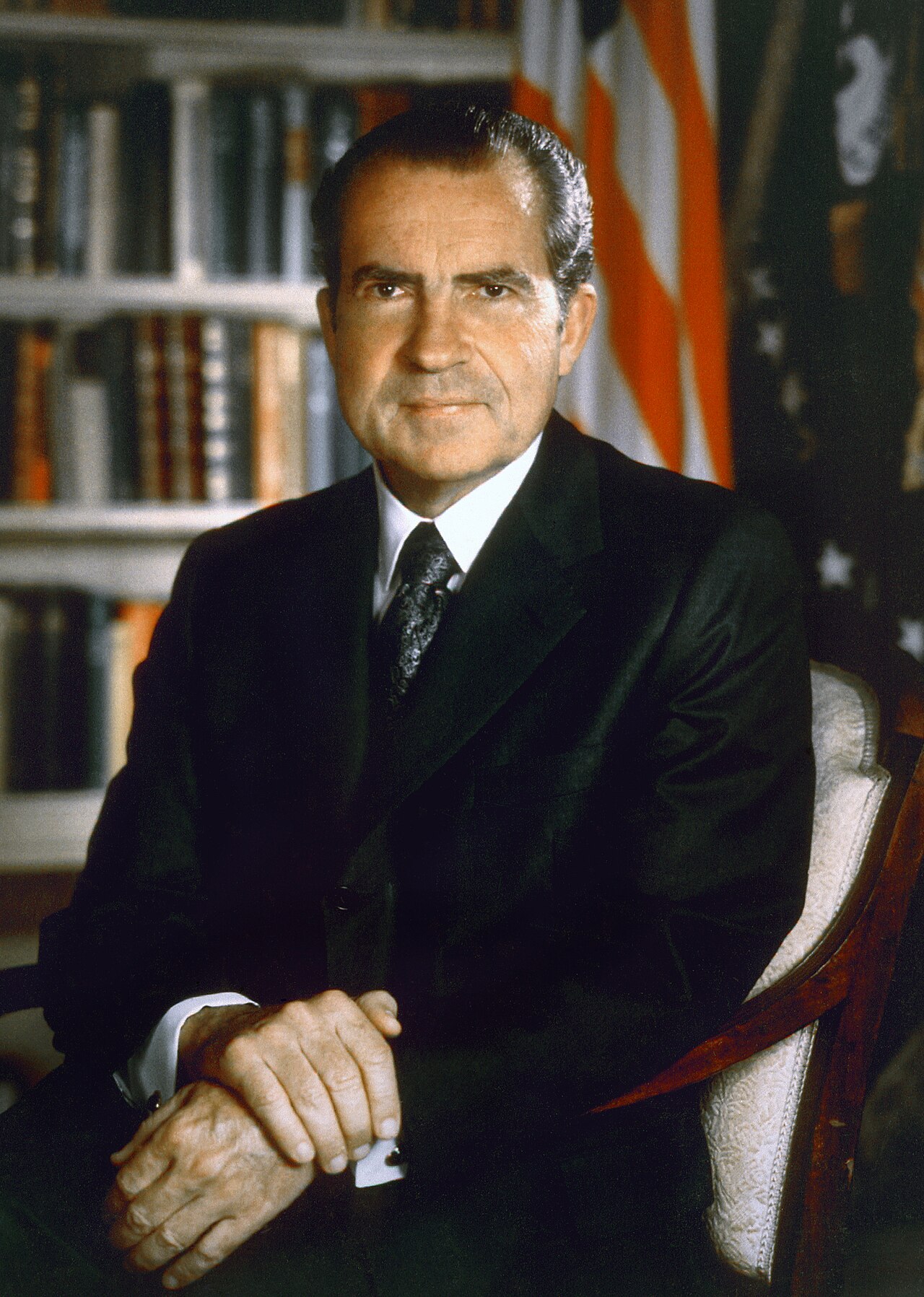
The President of the United States was about to do something no American president had ever done in public.
Richard Nixon was walking into a Veterans of Foreign Wars convention when he spotted reporters trailing behind, cameras ready. Something snapped. He grabbed his press secretary, Ron Ziegler, by the shoulders. Jabbed a finger into his chest. Spun him around. Then shoved him—hard—with both hands.
“I don’t want any press with me and you take care of it.”
Dan Rather saw it happen. His cameraman got it all on tape. When Rather asked a presidential aide about what he’d just witnessed, the aide told him nothing had happened. So Rather called the White House directly. “I’m literally watching footage of the President shoving his own press secretary,” he said.
The official response? He’d misinterpreted what his camera recorded.
That evening, Rather introduced the clip to viewers with measured understatement: “What you are about to see is a rare glimpse in public of presidential irritation.”
Irritation. That word doesn’t come close to capturing what America was watching.
This was the man who opened relations with China—maybe the most significant diplomatic achievement since the Marshall Plan. The man who’d won re-election nine months earlier in a landslide, carrying forty-nine states. On paper, Nixon had nothing to fear.
And yet here he was, losing control in front of cameras over something as trivial as reporters doing what reporters always do.
If you’ve ever watched a successful leader lash out at a loyal employee over something small—if you’ve seen a talented pastor implode over minor criticism, or wondered why your incredibly competent boss can’t seem to trust anyone—you’ve seen this same phenomenon. The titles change. The contexts change. The internal machinery doesn’t.
At the time, most people assumed they were watching a man crack under Watergate pressure. Hunter S. Thompson, writing in Rolling Stone, predicted Nixon would “crack both physically and mentally,” adding that he felt “a touch of irrational sympathy for the old bastard.”
But pressure alone doesn’t explain what happened that day. Presidents face enormous pressure all the time. They don’t typically shove their staff on camera.
Something else was going on in Richard Nixon. Something that had been operating long before Watergate, long before the presidency—maybe as far back as a struggling lemon farm in Yorba Linda, California, where a shy boy grew up with a volatile father and a mother who left him for long stretches to care for his dying brother.
That shove wasn’t an aberration. It was a window.
What America glimpsed that August day wasn’t just a president under stress. It was the visible eruption of an invisible war—one Nixon had been fighting his entire life. Not against the press. Not against Democrats. Not against the “Eastern establishment” he resented so much. Against a voice inside his own head.
What Everyone Gets Wrong
If you’ve read anything about toxic leadership in the past twenty years, you already know what you’re supposed to think about leaders like Nixon.
They’re narcissists. They’re arrogant. They think they’re better than everyone else. They lack empathy. They’re driven by ego and a bottomless hunger for power.
The solution, we’re told, is to spot these dangerous personalities before they get any real power—and if they’re already in charge, protect yourself until they inevitably self-destruct.
This narrative is everywhere. Search “toxic leadership” and you’ll find endless articles about the “dark triad”—narcissism, Machiavellianism and psychopathy. Leadership shelves at bookstores overflow with titles promising to help you identify the narcissist in the corner office. Podcasts dissect bad bosses with the confidence of armchair psychiatrists while providing pseudo-science diagnoses for strangers.
There’s just one problem. This framework doesn’t actually help anyone.
“Don’t be a narcissist” isn’t actionable advice. It’s like telling someone “don’t be tall.”
It doesn’t help the person working for a difficult leader, because “your boss is a narcissist” offers no path forward except escape or endurance. You can’t change a narcissist. You can only survive them.
It doesn’t help the leader who sees troubling patterns in themselves, because nobody self-identifies as a narcissist. The diagnosis feels like a life sentence, not a starting point for growth. If the problem is a personality disorder baked into who you are, what exactly are you supposed to do about it?
And it doesn’t help the developing leader who wants to avoid these pitfalls, because “don’t be a narcissist” isn’t actionable advice. It’s like telling someone “don’t be tall.”
Here’s the bigger issue: the narcissism framework might not even be accurate.
True narcissistic personality disorder is rarer than the pop psychology industry suggests. The clinical diagnosis requires a pervasive pattern of grandiosity—a genuine belief that you’re categorically superior to others—plus a fundamental inability to feel empathy. These people exist, but they’re a small fraction of the leaders we casually slap that label on.
So what’s actually going on with the rest of them?
Think about Nixon again. Was he grandiose? This is the man who hid in his office, uncomfortable at social gatherings—the man his own Secretary of State described as “painfully shy.” Was he convinced of his superiority? This is the man who never stopped feeling like an outsider, who resented the Kennedys not because he thought he was better than them but because he feared he wasn’t. Did he lack the capacity for empathy? This is the man who wept with Kissinger, who spoke tenderly about his mother decades after her death.
Nixon doesn’t fit the narcissist profile. Neither do a lot of the leaders we’ve lazily put in that box.
What if we’ve been asking the wrong question?
The standard question is: What’s wrong with these people? It assumes a defect, a flaw, a missing piece that separates “them” from “us.” It turns toxic leadership into a character indictment—useful for condemnation, useless for transformation.
But there’s a different question. One that opens doors the narcissism framework keeps shut: What are these leaders so afraid of?
Start asking that question, and everything shifts. The behaviors that looked like arrogance start looking like armor. The resistance to feedback stops seeming like ego and starts seeming like self-protection. The obsessive need for control reveals itself not as a power grab but as a desperate attempt to manage an internal threat that never goes away.
This book proposes a different way of understanding toxic leadership. One rooted not in personality defects but in anxiety. Not in grandiosity but in a profound, unrelenting sense of inadequacy. Not in the presence of something dark but in the absence of something essential.
The leaders who cause the most damage aren’t usually the ones who think too highly of themselves. They’re the ones who secretly don’t think highly enough of themselves—and have built their entire leadership identity around making sure no one ever finds out.
If toxic leadership isn’t really about narcissism—if it’s actually about leaders who secretly believe they’re not enough—then we need a new framework. We need language for what’s actually happening inside these leaders. Language that explains behaviors the narcissism model can’t account for. And more importantly, language that points toward change rather than just diagnosis.
That language starts with a character you already know. You may not have given it a name, but you’ve heard its voice. And once you understand how this voice operates in your own life, you’ll start recognizing its fingerprints all over the leaders who’ve caused you the most confusion and pain—and maybe all over patterns in yourself you’ve never been able to explain.
A Voice You Already Know
You’ve met the Critic.
Maybe it spoke to you this morning when you looked in the mirror. Maybe it whispered during your last presentation, pointing out every stumble, every awkward pause, every moment you fell short. Maybe it kept you awake last night, replaying a conversation and cataloging everything you should’ve said differently.
The Critic is that internal voice that notices your failures with surgical precision and reminds you of them with impeccable timing.
The Critic is that internal voice that notices your failures with surgical precision and reminds you of them with impeccable timing. It remembers the embarrassment from fifteen years ago as vividly as yesterday’s mistake. It compares you to others and finds you wanting.
It takes your accomplishments and explains why they don’t really count—luck, timing, other people not seeing the real you yet.
You know this voice. Everyone does.
For most people, the Critic is an unwelcome visitor who shows up, makes a mess, and eventually leaves. It speaks, you wince, you recover, you move on. It stings, but it doesn’t define you. It’s one voice among many—and usually not the loudest.
But for some people, the Critic never leaves.
It takes up permanent residence. It speaks first and loudest on every matter of consequence. It doesn’t visit during moments of failure—it provides running commentary on everything, all the time, scanning constantly for evidence of inadequacy.
For these people, the Critic isn’t a visitor. It’s a roommate who never shuts up, never sleeps, and never offers a single word of encouragement.
Now imagine this critic-tormented person becomes a leader.
Imagine they’re talented—genuinely talented. Smart, driven, capable of real achievement. They climb. They succeed. From the outside, they look like they have it all together. They might run companies, lead ministries, command organizations, even govern nations.
But inside, the Critic is keeping pace with every promotion, every achievement, every external validation. And it’s not impressed.
Where others see success, the Critic sees luck running out. Where others see competence, it sees a performance that can’t be sustained. Where others see a leader, it sees a frightened person in an increasingly elaborate disguise.
This is the leader who can’t delegate—because the Critic says no one can get close enough to see the truth. This is the leader who can’t receive feedback—because the Critic already provides more than enough. This is the leader who can’t celebrate wins—because the Critic immediately pivots to what could still go wrong.
This is the leader who can’t trust—because the Critic insists that loyalty is a temporary illusion.
And critically: this is the leader who can’t admit fault. For these leaders, an admission of fault is impossible because the Critic has made the internal burden of failure so heavy that taking responsibility for a misstep feels unsurvivable.
The Critic isn’t a personality disorder. It isn’t a character defect. It isn’t proof that someone is beyond redemption or fundamentally broken. The Critic is a voice. A deeply ingrained pattern of internal dialogue that developed for reasons—often in childhood, often in environments where performance determined safety, where love felt conditional, where failure carried consequences too big for a young person to process.
In its own twisted way, the Critic was trying to help. If I criticize myself first, no one else’s criticism can surprise me. If I never relax, I’ll never be caught off guard. If I assume the worst, I’ll never be disappointed.
But what starts as protection becomes a prison. The Critic’s tactics calcify. What worked as a survival strategy for a child becomes a sabotage system for an adult. The very mechanism designed to prevent failure starts engineering it.
Nixon had every tool a leader could want. Strategic brilliance. Resilience that bordered on supernatural—how many politicians could’ve resurrected a career after the 1962 “you won’t have Nixon to kick around anymore” debacle? Work ethic that shamed his peers. A genuine vision for reshaping global politics.
None of it was enough to quiet the voice telling him he didn’t belong. That the Eastern establishment saw through him. That his enemies were closing in. That any moment of rest could become the moment of exposure.
Henry Kissinger, the man who worked most closely with Nixon on his greatest achievements, put it this way: “Few men so needed to be loved and were so shy about the grammar of love.”
Nixon desperately needed something he never learned how to receive. And into that gap, the Critic spoke powerfully.
Nixon, of course, was not unique in struggling with the critic. The event organizer who builds a thriving business with lots of clients but can’t handle an unsolicited idea from their team. The CEO who revolutionizes an industry but burns through assistants every six months. The nonprofit director whose vision is unassailable but whose staff lives in constant fear. These leaders have more in common with Nixon than they’d ever admit. And the Critic is what connects them.
The Vortex Is Not Inevitable
Before I walk you through how the Anxiety Vortex works, I need to make something clear: the spiral can be stopped. Leaders can resist the Critic’s pull. The cycle is powerful, but it’s not irresistible.
We have historical proof.
Think about the contrast between two presidential crises.
We’ve already seen Nixon’s moment—the shove in New Orleans. A president at the height of his power, undone by the trivial presence of reporters at a public event. No policy failure. No lives lost. No real threat to the republic. Just cameras where he didn’t want them. His response? Physical aggression followed by denial.
Now rewind twelve years. April 1961.
A young President Kennedy has just presided over one of the most humiliating foreign policy disasters in American history. The Bay of Pigs invasion has failed catastrophically. Cuban exiles trained by the CIA have been killed or captured. America’s covert hand has been exposed to the world. The Soviet Union is emboldened. Kennedy’s administration is barely three months old, and he’s handed his critics a genuine catastrophe—not a “third-rate burglary,” but a first-rate debacle with body counts and international consequences.
The Critic, we can assume, was screaming.
You failed. You trusted the wrong advisors. You should’ve known better. Your presidency is over before it started. If you admit what happened, they’ll destroy you.
And yet Kennedy walked to the podium and said words Nixon proved incapable of uttering:
“There’s an old saying that victory has a hundred fathers and defeat is an orphan... I’m the responsible officer of the Government.”
No deflection to the CIA. No blame shifted to Eisenhower-era planning. No claims that circumstances forced his hand.
Just ownership.
The result? Kennedy’s approval ratings rose. Turns out, people are more attracted to a leader who can accept responsibility than one who pretends to be infallible.
Kennedy heard the Critic—he must have—but he didn’t obey it. He resisted the pull toward self-protection. He stepped off the Vortex before it could accelerate.
Don’t get me wrong. I’m not trying to canonize Kennedy. He had plenty of flaws, and history has revealed shadows his contemporaries didn’t see. But in this moment, on this question, he demonstrated something Nixon never could: the ability to absorb a failure without being annihilated by it.
The contrast proves the point. The Anxiety Vortex is not destiny. A leader can face genuine disaster—far worse than unwanted reporters at a convention—and choose truth over self-protection.
Which raises the question this book keeps coming back to: What determines whether a leader can resist the Vortex? And for those whose Critic speaks louder, whose pull toward the spiral feels overwhelming—is there a way out? There is. But first, we need to understand exactly how the Vortex works.
The Anxiety Vortex
The Critic doesn’t just speak. It creates a self-reinforcing cycle—a downward spiral that pulls leaders deeper into the very behaviors that will ultimately destroy them.
Understanding this cycle is essential. Once you can see it, you’ll recognize it everywhere: in Scripture, in history, in the news, and maybe in your own mirror.
I call it the Anxiety Vortex, and it moves through five stages.
Stage One: The Critic Goads
The cycle starts with pressure—real or perceived. Something threatens the leader’s sense of control, competence, or security.
Maybe it’s external: a delayed decision, a subordinate’s failure, an unexpected challenge. Maybe it’s purely internal: a sleepless night, a passing comment that landed wrong, an old insecurity resurfacing.
Whatever the trigger, the Critic seizes the moment. Its voice grows loud and urgent.
A real leader wouldn’t let this happen. You’re losing control. People are watching. They’re starting to see who you really are. You need to do something—now.
The Critic specializes in urgency. It collapses the space for reflection. It insists that action—any action—is better than the vulnerability of waiting, trusting, or admitting uncertainty.
Stage Two: The Leader Acts Badly
Under the Critic’s pressure, the leader makes a choice they wouldn’t make in a calmer state.
Maybe it’s a small compromise—a shortcut, a half-truth, a decision that prioritizes self-protection over integrity. Maybe it’s explosive—an angry outburst, a reckless power play, a line crossed that can’t be uncrossed.
The action varies. The motivation doesn’t. The leader acts not from wisdom but from anxiety. They’re trying to silence the Critic, regain control, outrun the feeling that everything’s about to collapse.
Sometimes they know, even in the moment, that they’re making a mistake. More often, the Critic has provided a convenient rationalization: This is for the greater good. Extraordinary circumstances require extraordinary measures. The rules don’t apply here. You’ll fix it later.
Stage Three: The Critic Condemns
Here’s the cruel turn.
The Critic that pressured the leader into acting badly now condemns them for the very action it demanded.
Look what you did. You know better than that. If anyone finds out, it’s over. Everything you’ve built will come crashing down. You thought you were inadequate before—now you have proof.
The Critic offers no grace, no perspective, no pathway to repentance. It just adds this new failure to the ledger it’s been keeping for years.
And this is where the trap closes.
Stage Four: The Leader Defends
The weight of Stage Three feels unsurvivable. The Critic has made the internal experience of failure so unbearable that the leader can’t tolerate any external confirmation of it.
If the outside world adds its voice to the Critic’s chorus, the leader believes—consciously or not—they’ll be annihilated.
So they defend. They minimize, deny, rationalize, deflect. They shift blame to circumstances, to subordinates, to enemies real and imagined. They rewrite the narrative so the bad action wasn’t really bad, or wasn’t really theirs, or was actually someone else’s fault.
This isn’t calculated manipulation—though it looks that way from outside. It’s survival. The leader isn’t primarily trying to deceive others; they’re trying to keep the Critic from winning. Admitting fault would mean agreeing with the voice that’s been telling them all along they’re worthless. They can’t let that voice be right.
Stage Five: The Defense Creates New Damage
But defense requires energy. It requires maintaining a version of reality others don’t share. It requires vigilance against anyone who might contradict the narrative. It creates distance from people who could offer perspective, grace, or accountability.
The cover-up becomes worse than the crime. The leader’s defensive posture alienates allies, confirms critics’ suspicions, generates new conflicts requiring new defenses. Trust erodes. Relationships become transactional—sorted into “loyal” and “threatening.” The leader grows isolated, more dependent on the Critic’s voice because they’ve cut themselves off from every other voice.
And here’s the vortex: the damage from Stage Five becomes the trigger for Stage One, and the process loops.
The Critic now has fresh material. See what’s happening? You’re losing control. People are turning against you. You need to act—now.
The spiral accelerates. Each rotation pulls the leader deeper. What started as a single anxious decision becomes a pattern, then a lifestyle, then a legacy of destruction.
Saul at Gilgal (1 Sam 13)
We can watch the Anxiety Vortex spin in one of Scripture’s most tragic leadership failures.
King Saul was waiting at Gilgal. The prophet Samuel had told him to wait seven days for Samuel to arrive and offer the pre-battle sacrifice. But as the days passed, Saul watched his army melt away. Soldiers were scattering, deserting, hiding in caves. The Philistine threat loomed.
And Samuel was nowhere to be seen.
Stage One: The Critic seized the moment. A real king wouldn’t stand here watching his army disappear. A real king would take charge. Samuel’s late—that’s his failure, not yours. Your men are losing confidence. If you don’t act, you’ll have no army left. Do something.
Stage Two: Saul offered the sacrifice himself—a responsibility reserved for the prophet, a boundary he knew he wasn’t supposed to cross. The Critic had provided the rationalization: extraordinary circumstances, the greater good, no other option.
Stage Three: And then Samuel arrived. “What have you done?” The Critic’s condemnation was now external—spoken aloud by God’s prophet. Saul’s worst fear—exposure, judgment, confirmation of inadequacy—stood right in front of him.
Stage Four: Watch how Saul responds. Does he say, “I sinned. I was afraid. I made a terrible mistake”? No. He says, “When I saw that the men were scattering, and that you didn’t come at the set time, and that the Philistines were assembling... I felt compelled to offer the burnt offering.”
The men were scattering. You didn’t come. The Philistines were assembling. I felt compelled.
Circumstances. Someone else’s failure. External pressure. Compulsion.
Saul can’t own what he’s done because the Critic has made ownership feel unsurvivable. So he defends—and in defending, reveals he’s more committed to managing his image than telling the truth about his soul.
Stage Five: Samuel delivers the consequence: Saul’s kingdom won’t endure. And from this moment forward, we watch Saul spiral. The insecurity that drove him to make the sacrifice deepens. His grip tightens. His suspicion grows. Eventually, a young shepherd named David enters his court, and Saul spends years hunting an innocent man through the wilderness—because the Critic won’t let him rest, and the Vortex won’t stop spinning.
The same mechanism. The same cycle. Thousands of years before Nixon grabbed Ron Ziegler by the shoulders, a king in Israel demonstrated that the Anxiety Vortex isn’t a modern phenomenon. It’s a human one.
Nixon in the Vortex
June 17, 1972. Shortly after 2:00 a.m.
A security guard named Frank Wills is making his rounds at the Watergate complex. He notices tape over the latches on a basement door—someone’s keeping it from locking. He removes the tape. When he comes back later and finds fresh tape in the same spot, he calls the police.
Within an hour, five men are in handcuffs inside the Democratic National Committee headquarters. They’re wearing surgical gloves. They’re carrying surveillance equipment, lock picks, and sequentially numbered hundred-dollar bills. One of them has a check in his pocket that will eventually trace back to the Committee to Re-elect the President.
Richard Nixon is asleep in the Bahamas.
He doesn’t know yet that the next two years of his life—and the final verdict of his legacy—are being determined by duct tape on a door latch.
Stage One: The Critic Goads
It’s likely that Nixon didn’t order the break-in. And I would argue it’s likely he didn’t know about it in advance. When he first hears the news, his reaction is dismissive. A bungled burglary. An embarrassment. Nothing more.
But within days, the picture shifts.
The burglars aren’t random criminals. They have connections—to his campaign, to his White House, to covert operations his administration has been running. If investigators follow that trail, it leads somewhere Nixon can’t allow it to go.
Imagine the moment this becomes clear. Nixon is alone—he’s so often alone—reviewing what his aides have told him. The threads connecting these burglars to his inner circle. The potential for exposure. The questions that will be asked.
The Critic seizes the opening.
You’ve survived everything. The loss to Kennedy. The humiliation in California. The years when they all wrote you off. You clawed your way back. You’re months away from the biggest re-election victory in modern history. And now this—this stupid, pointless break-in by men you’ve never met—could unravel everything.
You need to control this. You need to manage it. You can’t let some third-rate burglary destroy what you’ve built.
Nixon has options. He could let the investigation proceed. Trust that his genuine distance from the break-in will protect him. The political cost of a few rogue operatives would be minimal. His re-election isn’t in doubt.
But the Critic doesn’t weigh options. It demands action. And Nixon listens.
Stage Two: The Leader Acts Badly
June 23, 1972. Six days after the arrests.
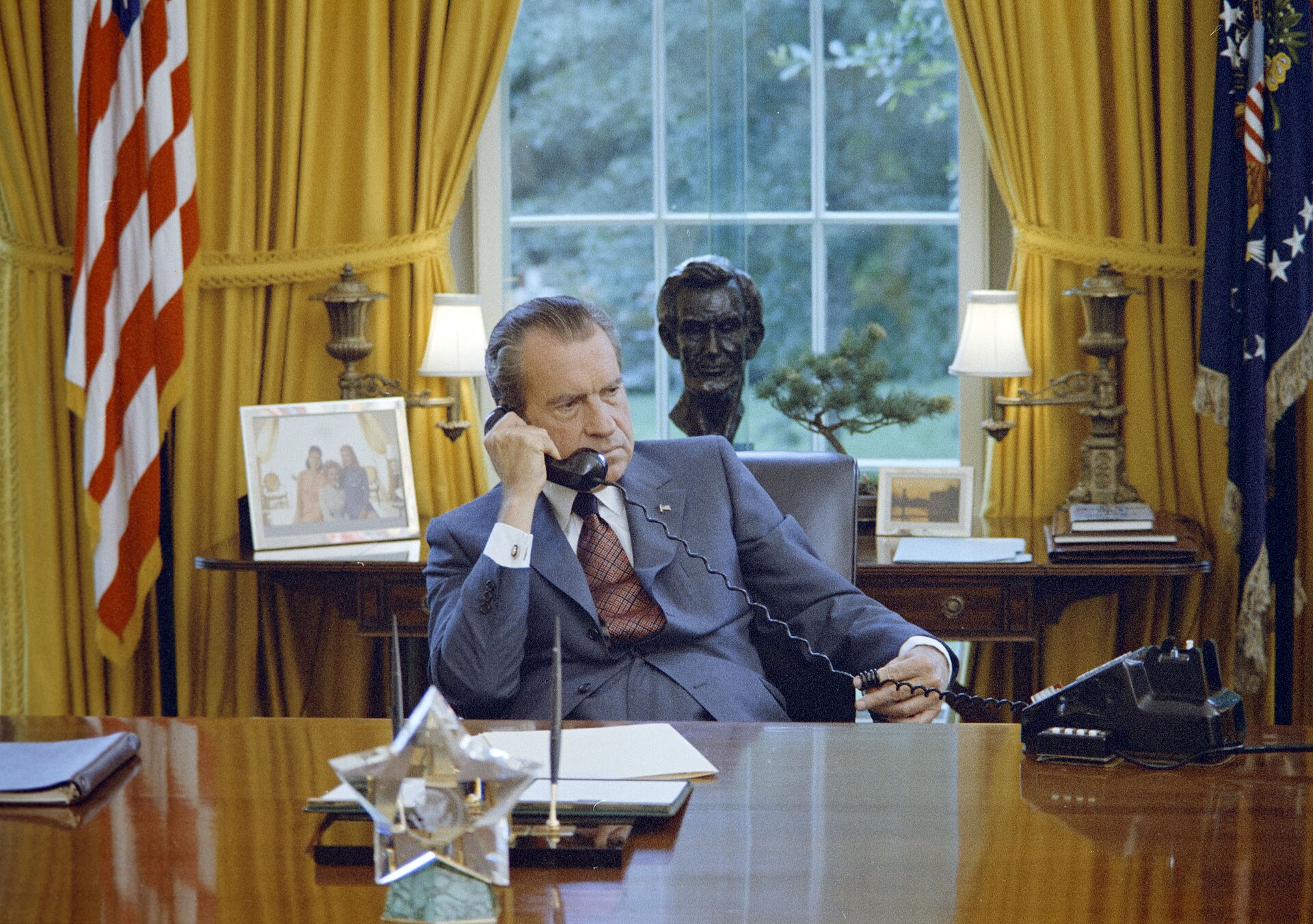
Nixon sits in the Oval Office with H.R. Haldeman, his chief of staff. The tape is rolling—Nixon’s own recording system, capturing every word. Neither man knows this conversation will become the “smoking gun.” That it will be the final evidence ending a presidency.
They’re discussing how to stop the FBI’s investigation. The problem is money—investigators are tracing the cash found on the burglars, and the trail leads to campaign funds. If they keep pulling that thread, it reaches the White House.
Nixon’s solution: use the CIA. Have the agency tell the FBI to back off, claiming the investigation threatens national security. It’s a lie, but it might work.
Listen to Nixon on that tape. This isn’t a man who sounds confident. This isn’t the cold strategist his enemies imagined. This is a man solving a problem, reaching for familiar tools, trying to make a threat go away.
“Play it tough. That’s the way they play it, and that’s the way we are going to play it.”
One decision. One meeting. One tape.
The cover-up has begun. And the Vortex has him now.
Stage Three: The Critic Condemns
The cover-up holds through the election. November 1972 brings the landslide Nixon expected—forty-nine states, over sixty percent of the popular vote, a historic mandate. On the surface, Watergate’s a minor story. A footnote.
But Nixon can’t enjoy what he’s won.
Picture him in the weeks after the election. He should be savoring victory, planning his second-term agenda, basking in vindication. Instead, he’s consumed by a crisis that officially doesn’t exist. Aides are being interviewed. Grand juries are convening. Woodward and Bernstein keep publishing stories that inch closer to the truth.
Inside, the Critic has shifted its attack.
Before the cover-up, it warned Nixon about what might happen if he didn’t act. Now it torments him with what he’s done.
You broke the law. You, the President of the United States, obstructed justice. If this comes out—and it’s going to, isn’t it?—you’ll lose everything. Not just the presidency. Your freedom. Your family’s name. Everything you’ve spent your whole life building.
You can’t go back now. You’re in too deep. The only way out is through. Hold the line. Trust no one. Control everything.
The Critic offers no exit ramp. It never does.
We hear it in the tapes Nixon chose to preserve. Late-night conversations, rambling and paranoid. Discussions about who might talk, who can be trusted, who needs managing. The voice of a man who won forty-nine states but can’t sleep, can’t rest and can’t stop calculating how it all might fall apart.
Stage Four: The Leader Defends
March 21, 1973. The Oval Office.
John Dean, the White House counsel, has requested a meeting. He’s nervous. He’s been managing the cover-up from inside, and he can see where this is heading.
“I think there’s no doubt about the seriousness of the problem we’ve got. We have a cancer within—close to the presidency—that’s growing. It’s growing daily.”
Cancer. The word hangs in the air.
Dean lays it out: the burglars are demanding money. Hunt wants $120,000 or he’ll start talking. More payments will be needed. The whole structure’s unstable, and it’s going to collapse.
This is Nixon’s last clear chance to step off the Vortex. His own counsel is telling him the cover-up is failing. He could decide, in this moment, to come clean. Take the hit. Survive diminished but intact.
Instead, Nixon asks how much it would take to keep everyone quiet.
“What I mean is, you could get a million dollars. And you could get it in cash. I know where it could be gotten.”
He’s not considering confession. He’s calculating the cost of continued defense. The line between managing a crisis and becoming the crisis has disappeared entirely.
April 30, 1973. The White House.
Nixon appears on national television. Haldeman and Ehrlichman—his two closest aides, the men who’ve been with him for years—have resigned. Dean’s been fired. The administration is bleeding out.
Nixon speaks to America with all the sincerity he can summon. He takes “responsibility” for what happened—but listen carefully to what he actually says. He didn’t know about the cover-up. He was too busy with Vietnam, China, the Soviets. When he learned what his subordinates had done, he acted to get the facts.
“There can be no whitewash at the White House,” Nixon declares.
The Critic has taught him well. Accept responsibility in the abstract. Blame subordinates for the specifics. Express shock that such things could happen without your knowledge. Maintain the boundary between yourself and the wrongdoing at all costs.
April 1973. A private phone conversation.
Billy Graham—America’s pastor, Nixon’s spiritual counselor, a man who’s prayed with him for decades—talks with the President. If there’s anyone in Nixon’s life positioned to offer a path toward confession, toward spiritual honesty, toward the unburdening that might heal his soul if not his presidency, it’s Graham.
Billy Graham: I think this is your finest hour.
President Nixon: That’s nice of you, Billy.
Billy Graham: Really, I wanted to reach through the TV screen and hug you... I thought you were just great, and everybody I’ve talked to feels the same way.
Richard Nixon: You know, they all continue to slash away, so what the hell.
Billy Graham: Well, you know Ruth, she...
Richard Nixon: Excuse me. Excuse me to hell, but...
Billy Graham: Well, Ruth, she thinks it’s all a communist plot, left-wing and everything else.
Richard Nixon: It is. It is. It is. You know that.
“It is. It is. It is. You know that.” Even here. Even with “America’s pastor” and his personal friend. Even when no political calculation could possibly apply.
Nixon couldn’t stop defending.
The Critic wouldn’t allow the words that might have changed everything: I did this. I was afraid. I lied. Help me.
Stage Five: The Defense Creates New Damage
October 20, 1973. The Saturday Night Massacre.
Nixon has ordered the firing of Archibald Cox, the special prosecutor investigating Watergate. Attorney General Richardson refuses and resigns. Deputy Attorney General Ruckelshaus refuses and gets fired. Finally, Solicitor General Bork carries out the order.
Nixon believes he’s managing the situation. Eliminating a threat. Taking decisive action.
Instead, he’s ignited a firestorm. Calls for impeachment explode. His support in Congress collapses. The action meant to protect him accelerates his destruction.
This is the Vortex at full speed. Every defensive action creates new damage. Every attempt to control the narrative spawns new enemies. The thing Nixon does to save himself becomes the thing that dooms him.
Late July 1974. The White House Residence.
Nixon has gathered his family—his daughters Julie and Tricia, their husbands. He holds a transcript. June 23, 1972. The smoking gun tape.
The Supreme Court has ordered him to release it. When it goes public, everyone will know he’s been lying for two years. His remaining support will evaporate. Impeachment is certain. Conviction likely.
This could be the moment. Surrounded by the people who love him most, holding proof of his own guilt, Nixon could finally let the defenses fall. He could say what he could never say to Graham, to America, to himself: I failed. I was wrong. I’m sorry.
Instead, the conversation becomes a strategy session. What are the options? What’s the political calculus? How can they manage the damage?
His daughters aren’t gathered for confession. They’re gathered as consultants.
The Vortex has taken everything. Even this.
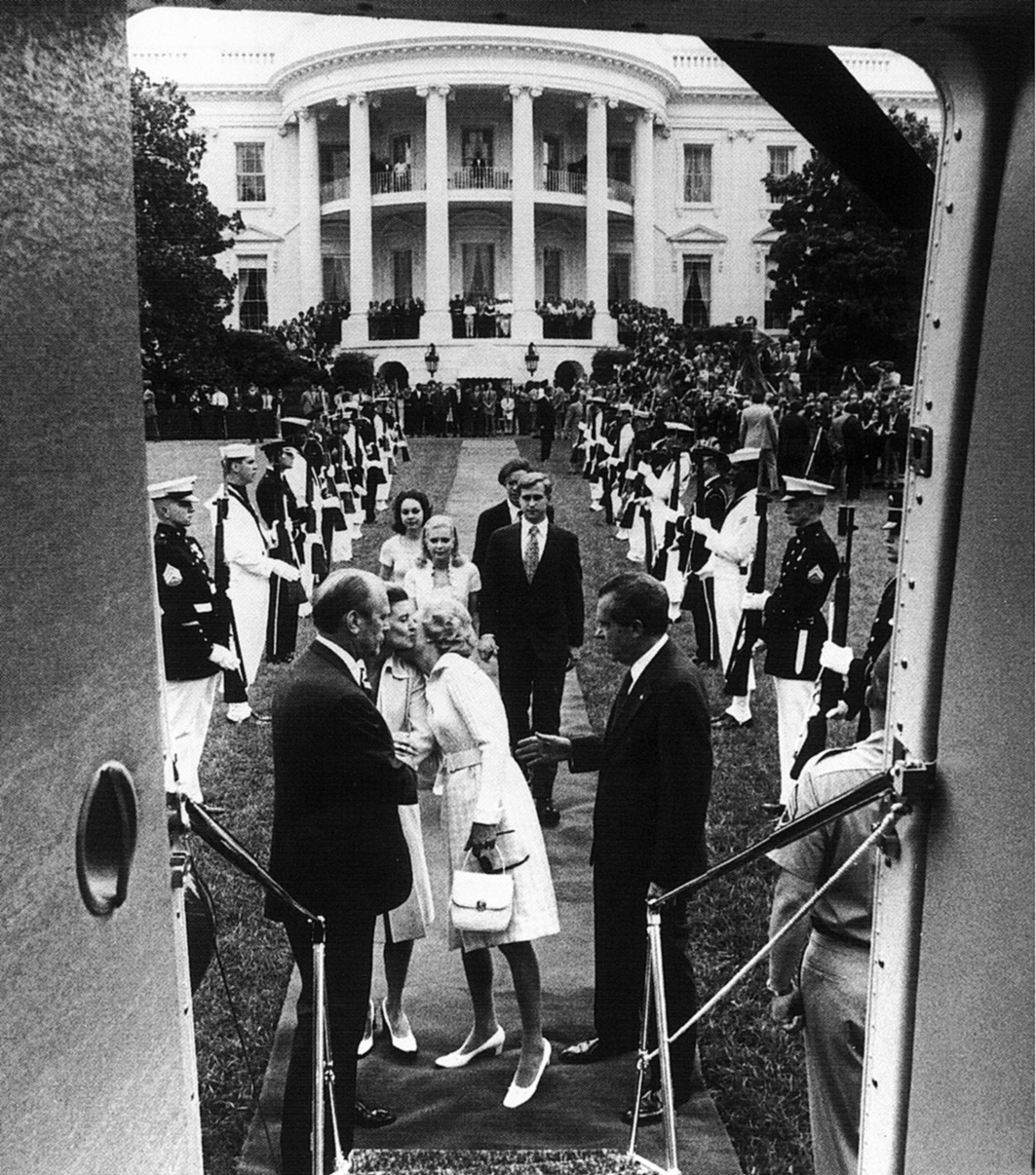
August 9, 1974. Nixon’s final morning in the White House.
He’s announced his resignation. In an hour, he’ll board a helicopter and leave Washington in disgrace. But first, he gathers his staff for a farewell.
Nixon is emotional—more visibly emotional than most aides have ever seen him. He rambles about his mother, calls her “a saint.” Somewhat randomly, he quotes Theodore Roosevelt. He seems, for once, unmanaged.
And then he says it. Maybe the truest thing he ever said in public:
“Always remember, others may hate you, but those who hate you don’t win unless you hate them, and then you destroy yourself.”
The staff weeps. Nixon weeps.
He knows. He’s always known. He can see the truth clearly enough to say it with precision. With eloquence, even.
But notice: even now, he delivers it as advice. As abstraction. As a lesson for the people in front of him—not a confession about himself.
“I destroyed myself.”
Three words. Three words that might have meant something.
He couldn’t say them.
Ron Ziegler—the press secretary Nixon shoved in New Orleans—stayed loyal to the end. He was on the plane to California. He stayed close during the years of exile.
Asked later about the shove, Ziegler said: “It was not a shove of anger. It was a shove of frustration.”
Frustration. Maybe the most tragic word in the whole story.
Nixon was frustrated—with the press, with his enemies, with the walls closing in. But mostly, he was frustrated with himself. With the gap between who he was and who he wanted to be. With his inability to do the one thing that might have saved him.
He could open China. He could win forty-nine states. He could reshape the global order.
He couldn’t say, “I was wrong.”
And so the Critic won.
The Skill They Never Learned
Here’s the paradox at the heart of toxic leadership: the very capabilities that propel leaders to the top often become the tools of their destruction.
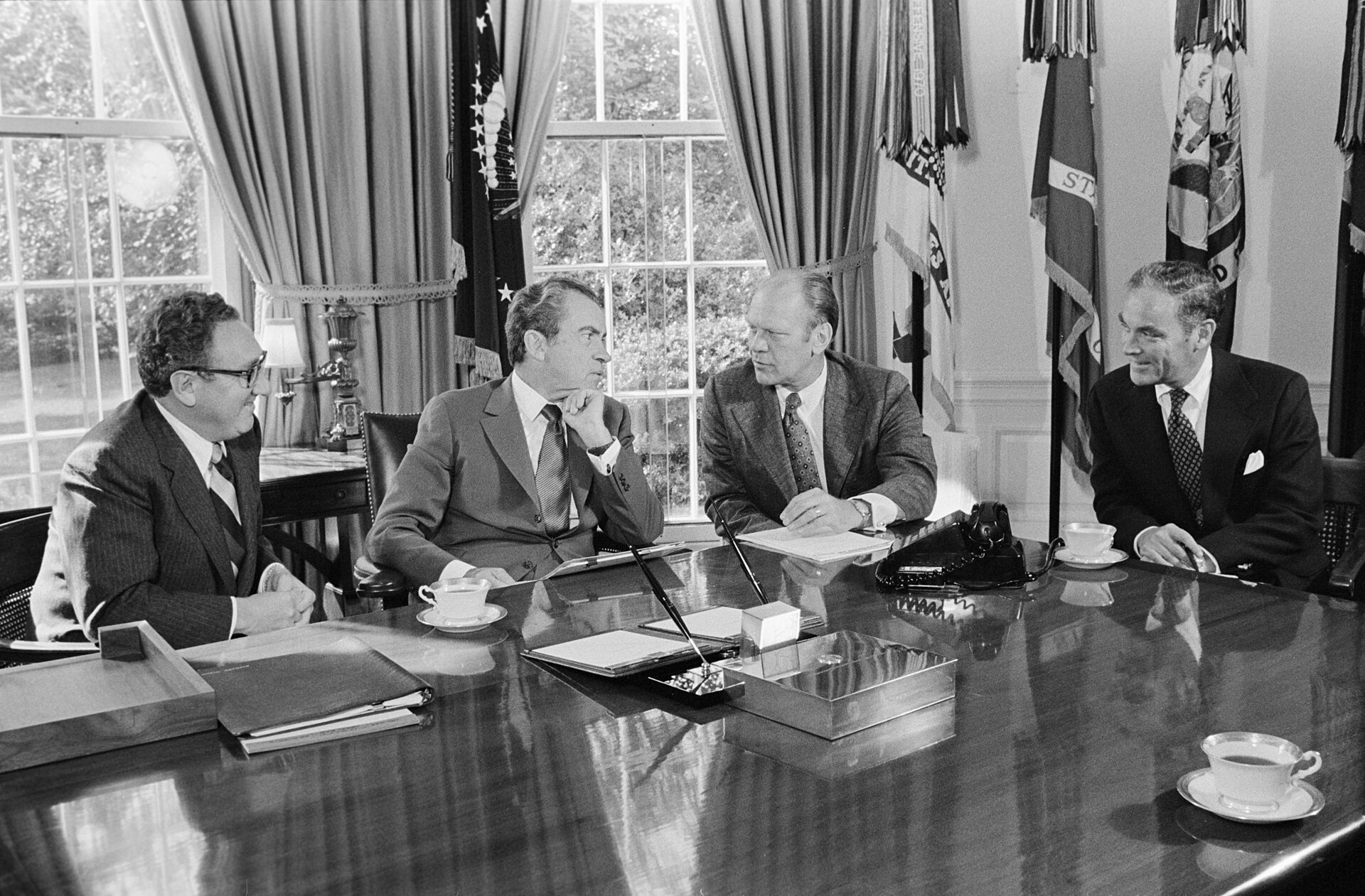
Nixon wasn’t unskilled. He was extraordinarily skilled—at strategy, at political calculation, at crisis management, at reading geopolitical dynamics, at working a problem until he found an angle others missed. These were genuine gifts, honed over decades. They took him from a struggling lemon farm in California to the most powerful office on earth.
But when the Critic started screaming—when failure loomed, when exposure threatened, when the internal pressure became unbearable—Nixon reached for the only tools he knew.
He strategized. He calculated. He managed. He tried to control the narrative, control the investigation, control the people around him.
He treated his own unraveling as a crisis to be managed rather than a sickness to be healed.
And that’s what toxic leaders do. When they hit failure—or even the possibility of failure—they don’t pause, reflect, confess, or seek help. They lean into their strengths. They do more of what made them successful in the first place, only harder and faster.
The problem? Managing a budget shortfall and managing the Critic require completely different skills. Controlling a political narrative and controlling your own anxiety are not the same competency. The executive toolkit that works brilliantly in the boardroom is useless—even counterproductive—when turned inward.
The executive toolkit that works brilliantly in the boardroom is useless — even counterproductive — when turned inward.
It’s like watching a surgeon try to operate on himself. He has the training. He has the instruments. He has steady hands. And that’s precisely the problem—his skill tempts him to believe he can do what should never be attempted. The competence that serves him in every other context seduces him into catastrophe.
Nixon could manage anything except himself.
This is why so many talented leaders implode. They’ve mastered the external game—the metrics, the optics, the organizational levers—but they’ve never developed the internal skill of sitting with failure without being annihilated by it. They can negotiate with foreign powers but can’t negotiate with their own shame. They can turn around a failing division but can’t turn around a failing self-narrative.
This gap is where the Critic does its damage. The leader reaches for familiar tools. Those tools don’t work—they were never designed for this. And each failed attempt to “manage” the internal crisis only deepens their sense of inadequacy, which fuels the Critic’s next round of accusations.
Kennedy, in his Bay of Pigs moment, demonstrated a different skill entirely. He didn’t try to manage the failure out of existence. Didn’t strategize around it. He simply absorbed it. Stood in front of the American people, owned what happened, and kept walking.
That’s not crisis management. That’s something harder: crisis acceptance.
The ability to let a failure be a failure—to resist the Critic’s demand that every setback be defended, explained, or externalized—is a skill. It can be learned. It can be practiced. But it requires inner work that most leadership programs ignore entirely.
We train leaders to manage organizations, projects, and people. We rarely train them to manage themselves—specifically, to manage the voice inside telling them they’re not enough and never will be.
We train leaders to manage organizations, projects, and people. We rarely train them to manage themselves.
The toxic leader isn’t someone who lacks skill. The toxic leader is someone whose considerable skills have never been complemented by the one competency that matters most: the ability to hear the Critic without obeying it, to experience failure without being consumed by it, to stand in a moment of exposure and choose honesty over self-protection.
This is the skill Nixon never developed. The skill Saul never developed. And if we’re honest, it’s the skill most of us are still developing—if we’ve even recognized the need for it.
The question isn’t whether you’re talented enough to lead. The question is whether you’ve built the internal infrastructure to handle what leadership will inevitably expose.
Because leadership will expose you. It exposes everyone. The only variable is what you do when it happens.
Why This Matters for You
You picked up this book for a reason.
Maybe you work for someone who fits this description. You’ve watched a talented leader self-destruct in slow motion—or worse, you’ve been caught in the blast radius. You’ve wondered why someone so capable can be so impossible. Why their gifts coexist with such glaring blind spots. Why every conversation feels like navigating a minefield.
You need to understand what you’re dealing with. And you need strategies for surviving it without losing yourself.
Maybe you recognized something in these pages. Not in a boss or colleague—in yourself. You’ve heard the Critic’s voice. Felt the pull of the Vortex. Caught yourself defending when you should’ve been confessing, controlling when you should’ve been trusting, managing perceptions when you should’ve been telling the truth.
You’re not sure if you’re a toxic leader. But you’re worried you could become one. You need more than diagnosis—you need a path forward.
Or maybe you’re early in your leadership journey. You haven’t accumulated enough power to do serious damage yet, but you can see the fork in the road ahead. You’ve watched others take the wrong path, and you don’t want to follow.
You need to build the internal infrastructure now—before success gives the Critic ammunition and authority gives you tools to act on its demands.
Wherever you’re starting from, this book is designed to help.
In the chapters ahead, we’ll examine how the Anxiety Vortex shows up in specific patterns of thought and behavior—patterns you’ll recognize immediately, whether in leaders you’ve known or in your own unguarded moments.
We’ll explore how toxic leaders construct a world of heroes and villains, casting themselves as the protagonist in a story where every critic is an enemy and every disagreement is an attack. We’ll watch Nixon divide the world into loyalists and threats. We’ll see Saul’s court become a place where proximity to the king meant proximity to danger. We’ll name the confirmation bias that filters reality, the blame-shifting that exports failure, and the tribal warfare that turns organizations into battlegrounds.
We’ll examine the toxic leader’s complicated relationship with truth—how they become the arbiter of what’s real, how they develop an allergic reaction to failure, and how they construct narratives of success requiring constant maintenance. We’ll listen to Nixon’s tapes and hear a man editing reality in real time. We’ll watch Saul rewrite his disobedience as reasonable response to circumstance.
We’ll investigate the obsession with competition that keeps toxic leaders focused on enemies rather than mission—the redirection that says “don’t look at me, look at them,” the justification that says “I’m not so bad compared to others,” the paranoid conviction that every threat to the leader is a threat to the whole organization. We’ll see Nixon’s enemies list metastasize from political opponents to journalists to anyone who asked uncomfortable questions.
And we’ll confront the toxic leader’s fundamental inability to see other people as real—the flattening of complex human beings into functions, the projection that assumes everyone operates from the same fears, the empathy exemption that renders others’ pain irrelevant. We’ll consider Kissinger’s observation about Nixon’s “grammar of love” and understand it not as poetic flourish but as clinical description.
Throughout each chapter, we’ll return to three questions:
If you work for this leader: What are you actually dealing with, and how do you protect yourself without becoming collateral damage?
If you see this in yourself: Where did this pattern come from, and what would it take to interrupt it before it costs you everything?
If you’re still developing: What can you build now that will inoculate you against this pattern later?
This isn’t a book about condemning toxic leaders from a safe distance. It’s a book about understanding the machinery well enough to dismantle it—in your organization, in your relationships, and if necessary, in yourself.
The Way Out
Understanding the machinery isn’t enough. Diagnosis without treatment is just a more sophisticated form of despair.
If the Anxiety Vortex is as powerful as I’ve described—if it can pull down a man brilliant enough to reshape global politics—what hope does anyone have? If Nixon couldn’t escape with all his intelligence and resilience, what chance do ordinary leaders have?
This is where we need to be careful, because there are two ditches on either side of the road.
The first ditch is fatalism. The Vortex is too strong. The Critic is too loud. Some people are just broken, and the best we can do is spot them early and keep them from power. This view is comfortable for those of us who imagine we’re not susceptible. But it offers nothing to the leader who sees themselves in these pages and desperately wants to change.
The second ditch is cheap optimism. Just think positive! Replace negative self-talk with affirmations! The Critic is mean, so be nice to yourself! This view sells books and fills seminars, but it collapses on contact with reality. The Critic isn’t defeated by slogans. Anyone who’s tried to out-think their own anxiety knows the mind can’t simply overpower itself.
The way out is narrower than either ditch. And it requires something most leadership books never mention.
The Critic’s power comes from one source: the belief that your identity depends on your performance.
The Critic’s power comes from one source: the belief that your identity depends on your performance.
As long as that equation holds—as long as you are what you achieve, what others think of you, what you can control and maintain and defend—the Critic will always have ammunition. Every failure becomes an identity crisis. Every criticism becomes an existential threat. Every setback becomes evidence for the verdict the Critic has already rendered.
Nixon couldn’t escape because he had no identity apart from his achievement. The poor Quaker kid from Yorba Linda became President—but inside, he was still the poor Quaker kid. Still trying to prove he belonged. Still waiting to be exposed. Still performing for an audience that would never applaud loudly enough.
Saul couldn’t escape for the same reason. He was anointed by God—his identity as king was given, not earned—but he never internalized it. He kept trying to secure what had already been secured. When Samuel was late, Saul couldn’t rest in his identity as the anointed one; he had to do something to shore up his position.
The given identity wasn’t enough. He needed to earn it, prove it, defend it.
And that’s the trap.
You can’t defeat the Critic by achievement, because achievement is the Critic’s home field. You can’t out-perform your way to peace, because the Critic will always raise the bar. You can’t earn an identity that satisfies the voice saying you’re not enough, because that voice doesn’t evaluate evidence—it renders verdicts.
The only way out is to ground your identity in something the Critic can’t touch.
For the Christian leader—and this is a book written primarily for Christian leaders—that something is the Gospel itself.
You’re not what you achieve. You’re not what others think of you. You’re not your successes or failures, your reputation or influence, your wins or losses.
You’re someone for whom Christ died.
Your identity is given, not earned. Received, not achieved. Before you led anything, before you accomplished anything, before you succeeded or failed at anything, you were known and loved by a God who chose you not because of your performance but in spite of it.
This isn’t a motivational slogan. It’s the only foundation that can withstand the Critic’s assault.
When the Critic says you’re not enough, the Gospel says you were never supposed to be enough—that’s why grace exists.
When the Critic says if they find out who you really are, it’s over, the Gospel says God already knows who you really are, and He’s still here.
When the Critic says this failure proves what I’ve always told you, the Gospel says your failures were accounted for before you ever committed them.
The Critic issues a stream of indictments.
The Gospel is a truth letter in an envelope of grace.
The Critic issues a stream of indictments. The Gospel is a truth letter in an envelope of grace.
Nixon never fully embraced the difference. He couldn’t receive what was freely offered because he’d spent his entire life trying to earn what can’t be earned. Remember what Kissinger said? “Few men so needed to be loved and were so shy about the grammar of love.”
The grammar of love. The grammar of grace. The grammar of an identity that doesn’t depend on the next success or collapse with the next failure.
This is what the Critic can’t touch. This is the foundation that holds when everything else shakes.
Learning this grammar is the work of a lifetime. It’s not accomplished by reading a chapter or praying a prayer or attending a seminar. It requires the slow, patient reconstruction of how you see yourself, how you relate to God, and how you understand your place in the world.
But it can be done. Leaders can change. The Vortex can be escaped.
Not by trying harder. Not by managing better. Not by white-knuckling your way to self-control.
By receiving what’s always been offered. By resting in what’s already been accomplished. By building your life on the only foundation that the Critic—for all its cruelty and persistence—can’t destroy.
The leaders who finish well aren’t the ones who never hear the Critic.
They’re the ones who’ve learned to hear another voice more clearly.
That voice says: You are mine. You are loved. And nothing you do or fail to do will change that.
The rest of this book will help you understand the Critic’s tactics—how it distorts your thinking, poisons your relationships, and drives you toward self-destruction. But as we walk through those patterns together, keep this chapter close.
The Critic is real. The Vortex is powerful.
But they’re not the final word. There is a way out.
End of Chapter One
Keep reading Talented & Toxic
The rest of the book walks through the Critic’s tactics one by one—the heroes-and-villains thinking, the confirmation bias, the blame-shifting, the competition obsession—and how to dismantle them, whether you work for a toxic leader, see the patterns in yourself, or simply want to lead well.
By Jonathan Hoover, Ph.D.
Historical photographs courtesy of the U.S. National Archives and the Nixon White House Photo Office (public domain). Chapter text © 2026 Jonathan Hoover. All rights reserved.